
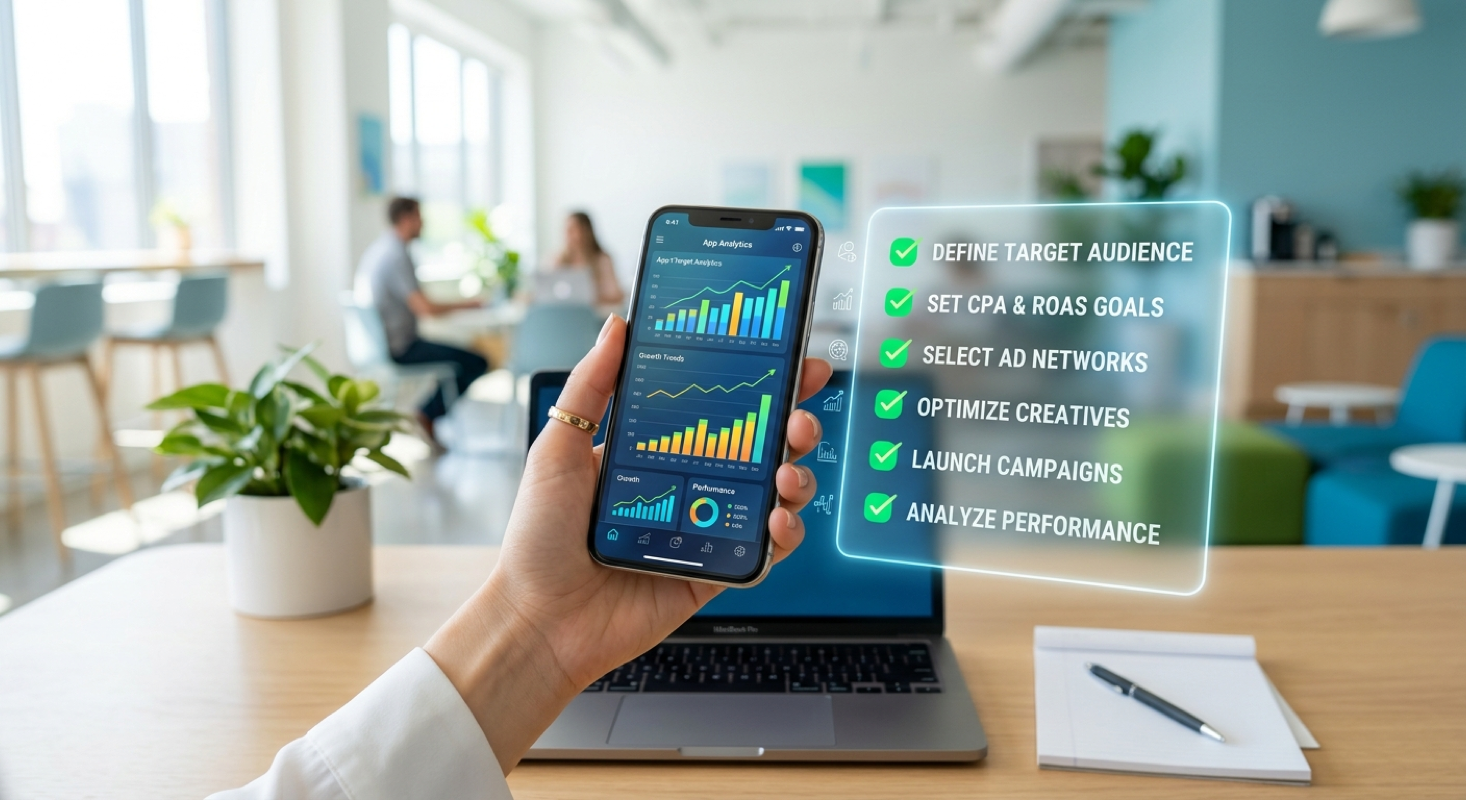
Mobile performance advertising means paying for measurable app outcomes, such as installs, registrations or purchases, rather than impressions. Before choosing a partner, compare which outcome the pricing model buys, which traffic-quality controls run during spend, and how results are measured beyond last-touch attribution.
Each section ends with one question to put to any partner, including us. Our managed mobile performance advertising service is built around the same three areas.
What mobile performance advertising pays for
Performance marketing ties spend to a user event after the click: an install, registration, purchase or later in-app action. The event definition matters more than the media plan. An install counted in a network's dashboard differs from one validated by your mobile measurement partner (MMP), and an install that registers and engages is more valuable still.
Ask: Which exact event, recorded in which system, triggers a charge?
Pricing models and the outcome each one buys
- CPI (cost per install) buys first opens. It scales predictably but rewards volume, so quality controls must keep low-value sources out.
- CPA (cost per action) buys a deeper event, such as a registration or first purchase. It shifts risk to the partner and aligns incentives, though it can scale more slowly.
- CPM and CPC buy delivery and traffic, not outcomes. They suit awareness or creative testing, but proving value falls on your measurement.
We compare the first two in CPI vs CPA in mobile advertising.
Ask: If I pay per install, what stops you optimising towards cheap installs that never convert?
Traffic quality controls to require before launch
Attribution decides which source gets credit, and therefore who gets paid; Singular's glossary entry on mobile attribution explains the mechanics. Reliable mobile ad performance measurement needs clean data, so require these controls in writing:
- Source transparency: named publishers, app IDs or placements, not a bundled buy.
- Incentivised-traffic disclosure: any rewarded installs declared and labelled.
- Fraud screening: rules that reject click spam, install hijacking, SDK spoofing and bots.
- Post-install event validation: billing reconciled against your MMP data.
No partner can promise fraud-free traffic; insist on a documented process and a right to dispute invalid conversions. Creative matters too: as AppsFlyer notes on creative testing, better creative can lift both conversion and user quality.
Ask: Can I see source-level data and reject installs that fail validation?
Measurement questions to ask before you commit budget
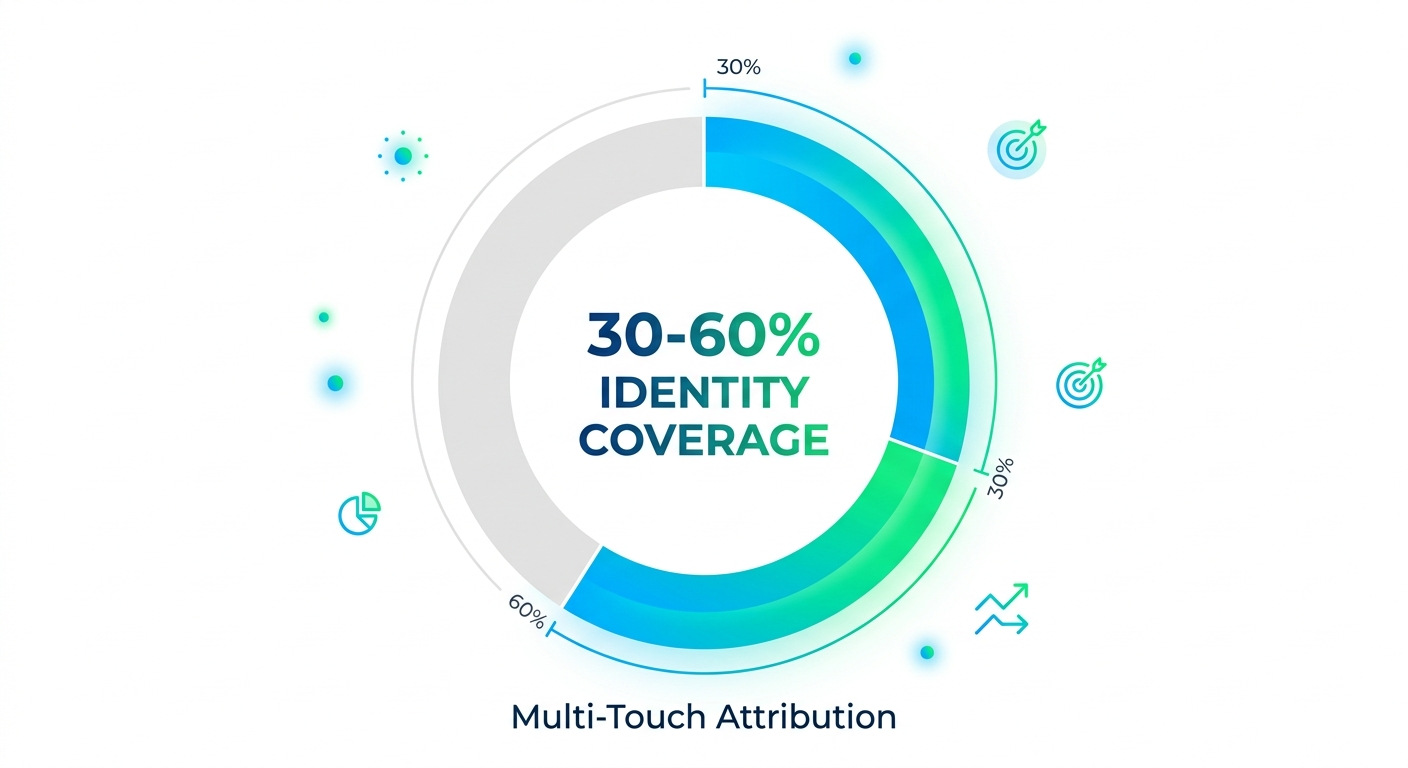
Last-touch attribution remains the day-to-day view, but privacy changes such as Apple's App Tracking Transparency have left user-level matching incomplete. A Digital Applied playbook published on May 27, 2026 estimated that multi-touch attribution now covers only 30-60% of user identities.
Read attribution alongside holdout tests and, for larger budgets, marketing mix modeling for mobile app campaigns. Claravine's explainer on mobile measurement is a good MMP primer, and our guide to privacy-first mobile app performance covers planning around signal loss.
Ask: How will you show that this spend caused conversions that would not have happened anyway?
Where retargeting fits: the shopping app example
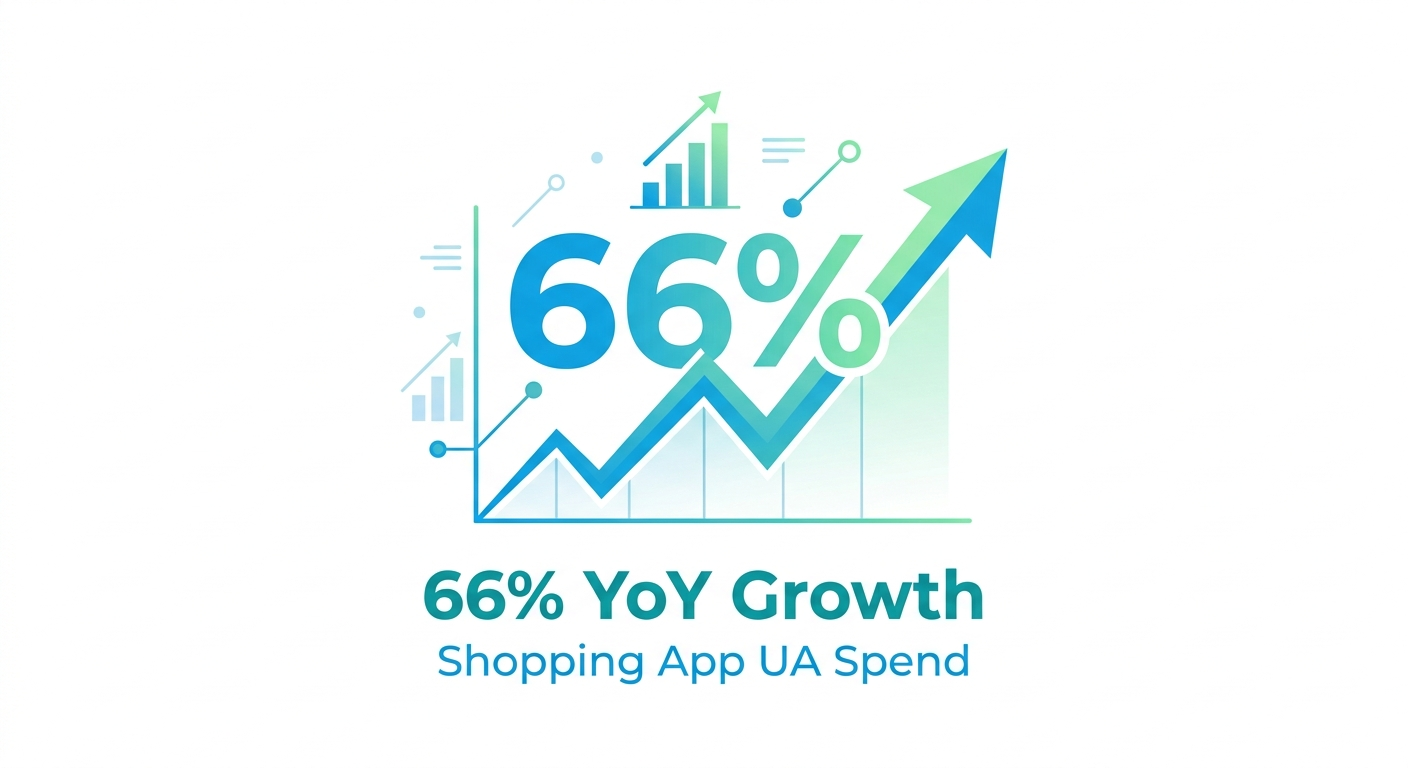
In e-commerce the goal is a purchase, and competition is rising: shopping app UA spend grew 66% year over year, as a report from Liftoff noted on January 1, 2026. Retargeting existing users can be efficient, but attribution easily overclaims purchases users would have made anyway. For shopping and e-commerce app campaigns, ask partners to report prospecting and retargeting separately and keep a control group.
Ask: What share of attributed purchases would a holdout group have made without ads?
Channel-neutral execution versus single-network buying
A single network sells only its own inventory, so its recommendations reflect what it has. A channel-neutral partner buys across networks, DSPs and self-serve platforms, moving budget to whatever performs, a more resilient mobile advertising strategy. Our mobile app user acquisition services work this way: inventory is an input, and the client's business outcome is the product.
Ask: If a different channel performs better next month, will you move budget there?
Buyer's checklist for a mobile performance partner
| Area | What to ask | What a good answer looks like | Red flags |
|---|---|---|---|
| Pricing model | Which event triggers a charge, and in which system? | A named event, validated in your MMP | Billing from the network's own dashboard only |
| Traffic quality | Which controls run before and during spend? | Source transparency, incentive disclosure, fraud screening, event validation | "Our traffic is fraud-free" with no process shown |
| Measurement | How is incrementality tested? | Attribution read alongside holdouts, with MMM as a complement | Last-touch only; no control groups |
| Reporting and data access | How often do I see source-level data? | Regular reports plus raw data access | Aggregated totals only |
| Channel mix | Single network or channel-neutral? | Budget follows measured outcomes across channels | Every recommendation uses one inventory source |
Use this table to score every shortlisted provider, including Gadmobe for advertisers.
Next step: review your setup with Gadmobe
Apply this checklist to your current setup. Where answers are unclear, our managed mobile performance advertising team can walk through pricing, quality controls and measurement with you. We will not promise a specific CPI, CPA or ROAS; we will show how each part is controlled and measured. When ready, talk to Gadmobe about your current campaigns.