

Mobile app marketing needs a performance system that works when user-level signals are incomplete. Instead of treating attribution as the only answer, teams can combine business outcomes, attribution readouts, aggregate evidence, and controlled tests to make clearer budget and optimization decisions.
Why efficiency is now a mobile app marketing operating priority
Privacy changes have not made measurement disappear; they have made overconfidence in one dashboard riskier. For mobile advertising teams, the practical question is not “which individual user saw what?” but “which decisions can the available evidence support?” Google’s app measurement guidance similarly describes using multiple measurement approaches to maintain business visibility as signals change.
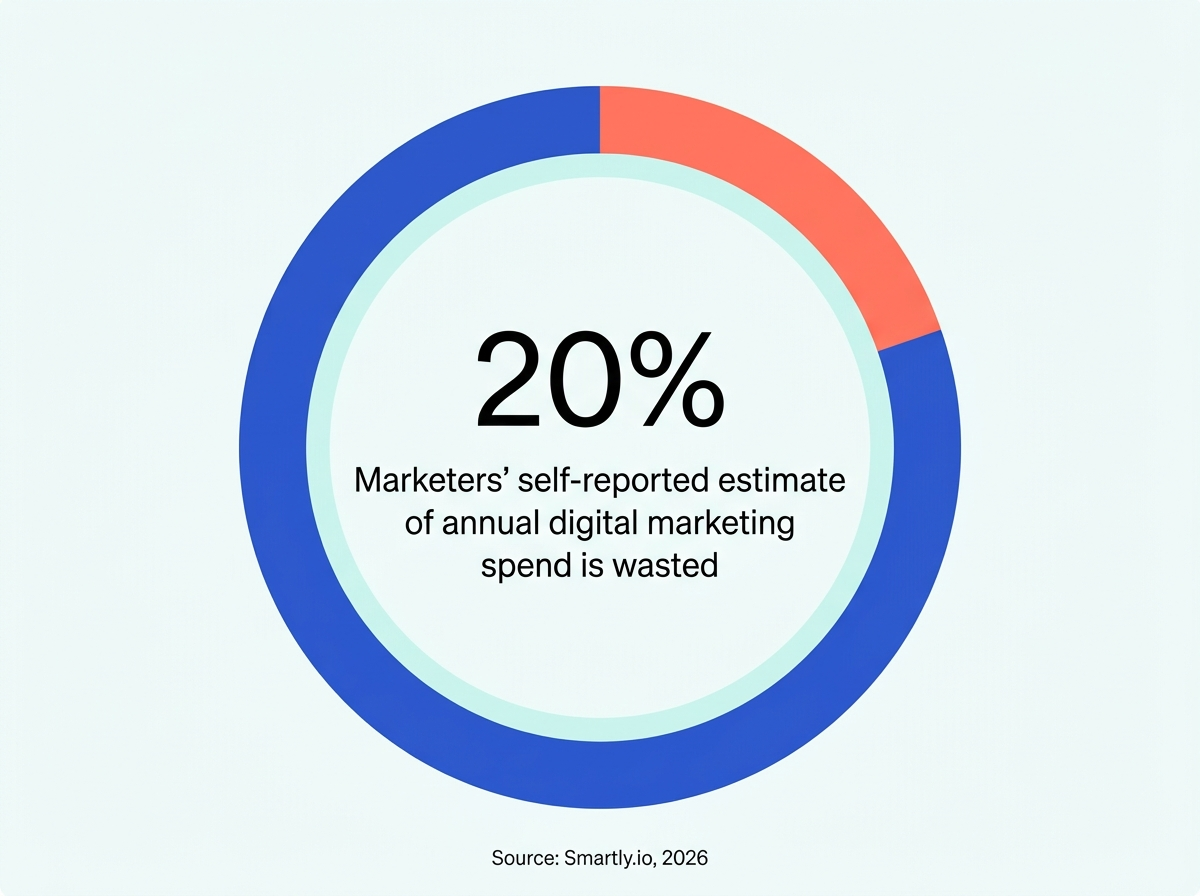
Efficiency matters because an unexamined assumption can direct spend away from the outcomes a team values. Smartly.io’s 2026 research reports that marketers estimated 20% of annual digital marketing spend was wasted. This is a self-reported estimate, not an audited mobile-app benchmark or a prediction of savings for any campaign. Use it as a reason to establish controls and a review cadence—not as a performance promise.
*Source: Smartly.io, 2026; marketer self-reported estimate, not an audited mobile-app benchmark.*
A privacy-first advertising approach is therefore an operating discipline: define success before launch, state the limits of each signal, and make budget changes only when the evidence fits the decision. Requirements and platform controls vary by jurisdiction and product, so each team should validate its own legal and platform obligations.
Build a measurement plan that does not depend on one signal
Start with the business outcome: qualified registrations, completed purchases, or downstream value—not merely the easiest in-app event to count. Then document which readouts inform which decisions. Mobile advertising attribution can help diagnose campaign activity; aggregate evidence can show broader patterns; and incrementality testing can examine whether an outcome might have occurred without an intervention. These methods answer related, but different, questions.
This evidence mix avoids the false choice between deterministic reporting and no reporting. Appier’s discussion of incrementality and last-click measurement is a useful reminder that a last recorded touch is not automatically the cause of an outcome. The appropriate design depends on volume, conversion lag, channel mix, privacy settings, and the decision at stake.
Create a one-page measurement plan before a major test. Name the commercial outcome, baseline, attribution readouts, aggregate or experimental evidence, decision owner, and review date. If a question concerns longer-horizon budget allocation, aggregate approaches may offer context; they do not replace a campaign-level test or prove that an individual channel caused a result.
Connect fragmented touchpoints to an optimization loop
Fragmented touchpoints should change the workflow, not lower the standard for a decision. Align channel plans, creative hypotheses, audience or contextual inputs where permitted, quality controls, and budget changes around the same declared outcome. This makes each adjustment traceable even where no system can deterministically join every exposure to every conversion.
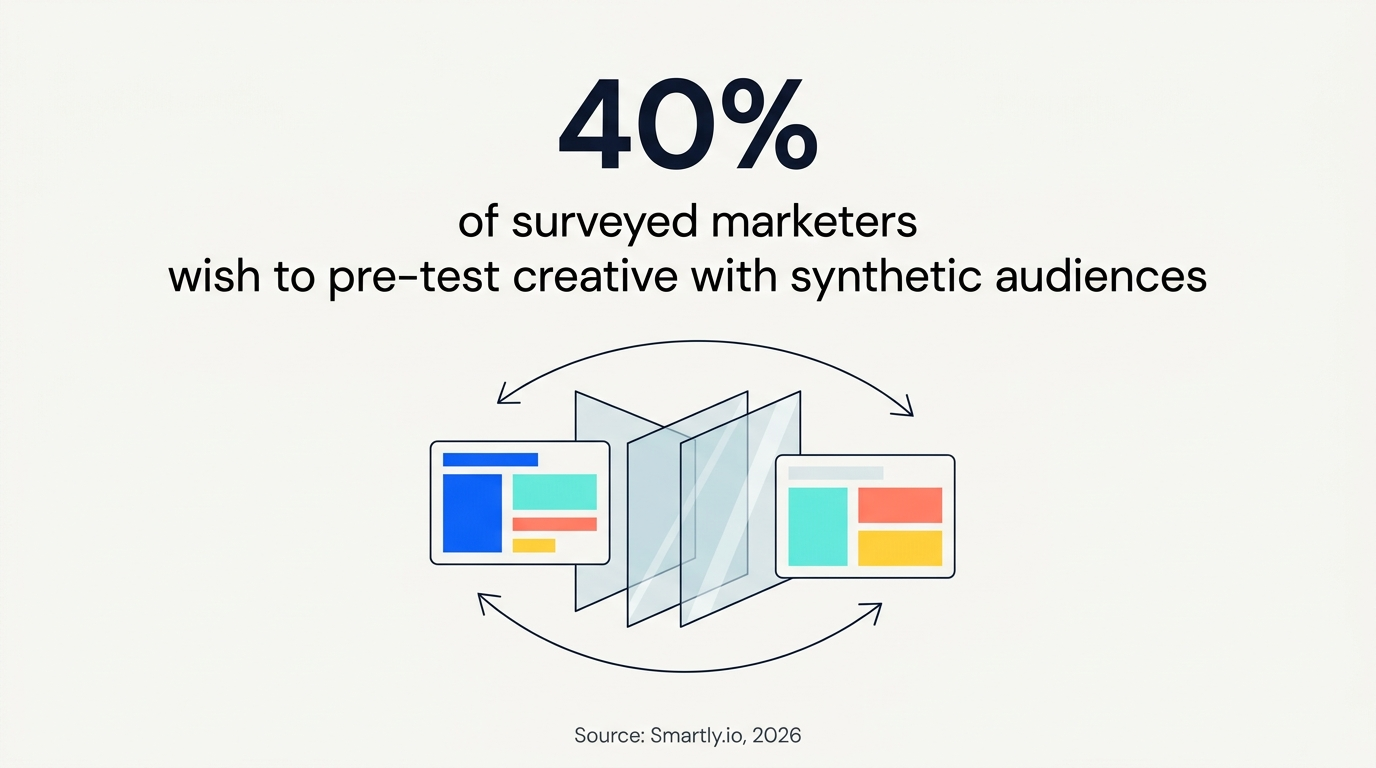
Creative testing belongs in that loop. Smartly.io reports that 40% of surveyed marketers wish to pre-test creative with synthetic audiences. That preference does not establish that synthetic testing will improve a particular app campaign. It does support setting a clear hypothesis and using live results to decide whether a creative direction merits further testing or spend.
*Source: Smartly.io, 2026; marketer survey result, not campaign-performance evidence.*
A practical cadence is simple: inspect delivery and quality signals frequently, review outcome evidence on an agreed schedule, and record what changed and why. The result is not perfect cross-channel attribution; it is an optimization loop that can be examined and improved. That distinction matters for marketing ROI measurement: a useful decision record is not the same as proof of causal impact.
Choose a mobile performance partner by operating transparency
A partner should be able to explain how goals become decisions. Ask for the measurement approach, the boundaries of its attribution reporting, inventory and quality-control approach, creative-test process, escalation rules, and reporting cadence. Adjust’s guide to selecting a mobile measurement partner and YouAppi’s privacy-first overview both point to methodological clarity rather than vague claims of precision.
For teams considering managed support, Gadmobe’s mobile performance advertising service is a commercial starting point for an exploratory consultation about objectives, measurement questions, and the service scope relevant to a campaign. It does not represent legal compliance, guaranteed ROI, or a proprietary measurement platform. For further context on measurement choices, see Gadmobe’s mobile performance advertising measurement guide.
A 30-day mobile app marketing action plan
Week one: audit events, business outcomes, reporting views, and decision owners; flag questions that one signal cannot answer. Week two: write a test brief with a baseline, hypothesis, guardrails, and decision date. Week three: run the smallest viable test while monitoring delivery and quality. Week four: review evidence, document the next budget or creative decision, and name the next measurement gap.
This is an adaptable framework, not a universal prescription. Geography, app category, platform policy, and data maturity change the appropriate controls. For related market context, read Gadmobe’s 2026 mobile app user-acquisition trends.
Frequently asked questions
What changes when user-level signals are incomplete?
Use an explicit mix of business outcomes, attribution readouts, aggregate patterns, and tests. Do not claim that every conversion can be assigned with certainty.
What should I ask a mobile performance partner?
Ask how goals, measurement limits, quality controls, tests, approvals, reporting cadence, and the applicable service scope are defined.
When is aggregate measurement useful?
It can inform strategic planning when individual-level tracking is limited, but it does not prove campaign-level causality.
A privacy-first mobile app marketing program earns confidence through clear questions, proportionate evidence, and documented decisions. That is a foundation for improving the decision process without promising certainty the data cannot provide.