

Mobile performance marketing is app advertising bought against a measurable outcome, such as an install, registration or first purchase, rather than impressions alone. This guide covers payout models, the KPIs that separate growth from cheap volume, and a 30-day pilot structure for testing a partner before committing budget.
What mobile performance marketing means for app advertisers
Brand campaigns buy attention and judge reach; performance campaigns buy a defined action and judge its value. The discipline covers planning, measurement and optimisation. Mobile performance advertising is its paid-media execution, priced and optimised against the event you agree to pay for. Each mobile app advertising budget should earn its next increase.
Mobile attribution connects an ad engagement with the install and later in-app activity. A mobile measurement partner (MMP) collects, matches and reports that data, as Adjust explains in its attribution guide (published 5 May 2026). Without it, outcome-based buying is guesswork.
Payout models and the risk each one shifts
Each model moves quality risk between advertiser and partner. For a deeper comparison, see our CPI vs CPA explainer.
| Model | Advertiser pays for | Who carries quality risk | Typical failure mode |
|---|---|---|---|
| CPM / CPC | Impressions or clicks | Advertiser | Clicks that never install |
| CPI | Attributed installs | Mostly advertiser | Installs that never open |
| CPA / CPE | A post-install event | Shared | Event set too shallow to signal value |
| Retention-linked | Users active on a later day | Mostly partner | Low volume, slow to read |
The KPI chain from install to retained, paying user
The chain is impression, click, install, activation event, day-1, day-7 and day-30 retention, then revenue or ROAS. Optimising at the top buys cheap volume before any value signal. A durable mobile app user acquisition plan pays for an event further down the chain.
> KPI-chain diagram: Flow diagram of steps from ad impression to retained, paying app user.
Working guidance on the payable event:
- Gaming: tutorial completion or an early level milestone within a short, agreed window, not the install.
- Social and entertainment: registration plus a meaningful action, such as following an account or sending a message.
- Shopping: registration or first add-to-cart while volume builds, moving to first purchase once data supports it.
Choose an event genuine users reach within days that correlates with later revenue in your own data. Agree its attribution window, because changing it changes cost per result. Fintech advertisers should note that financial-promotion rules vary by jurisdiction and need legal review before any campaign.
Why re-engagement belongs in a performance plan
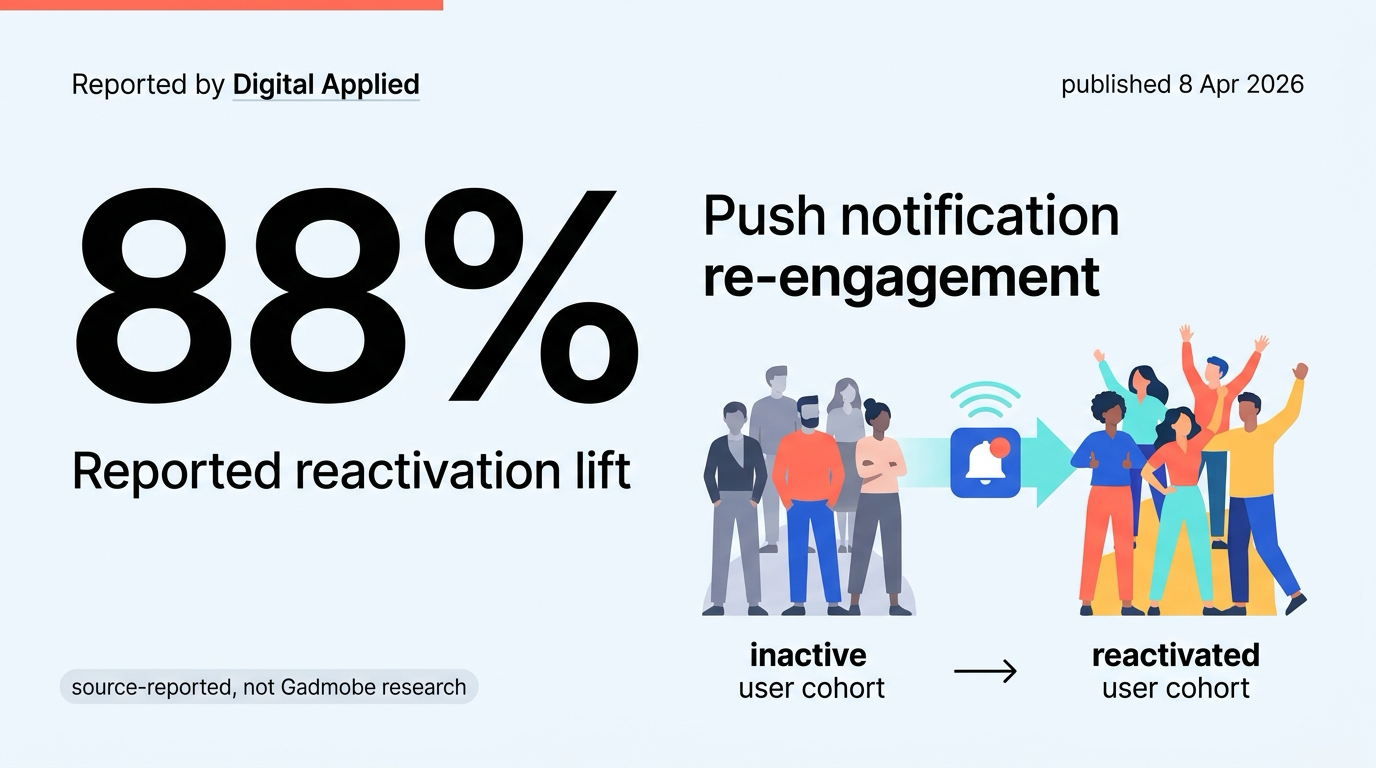
In mobile performance marketing, acquisition spend loses value if lapsed users never return. Push and in-app messaging complement paid re-engagement. As reported by Digital Applied (published 8 April 2026), push-enabled users showed an 88% reactivation lift versus push-disabled users. This observed difference between two groups does not prove push caused it and is not a Gadmobe finding. Push opt-in behaviour also differs between iOS and Android.
> Infographic: Chart comparing reported reactivation lift for push-enabled versus push-disabled app users.
How app discovery is shifting beyond stores and search
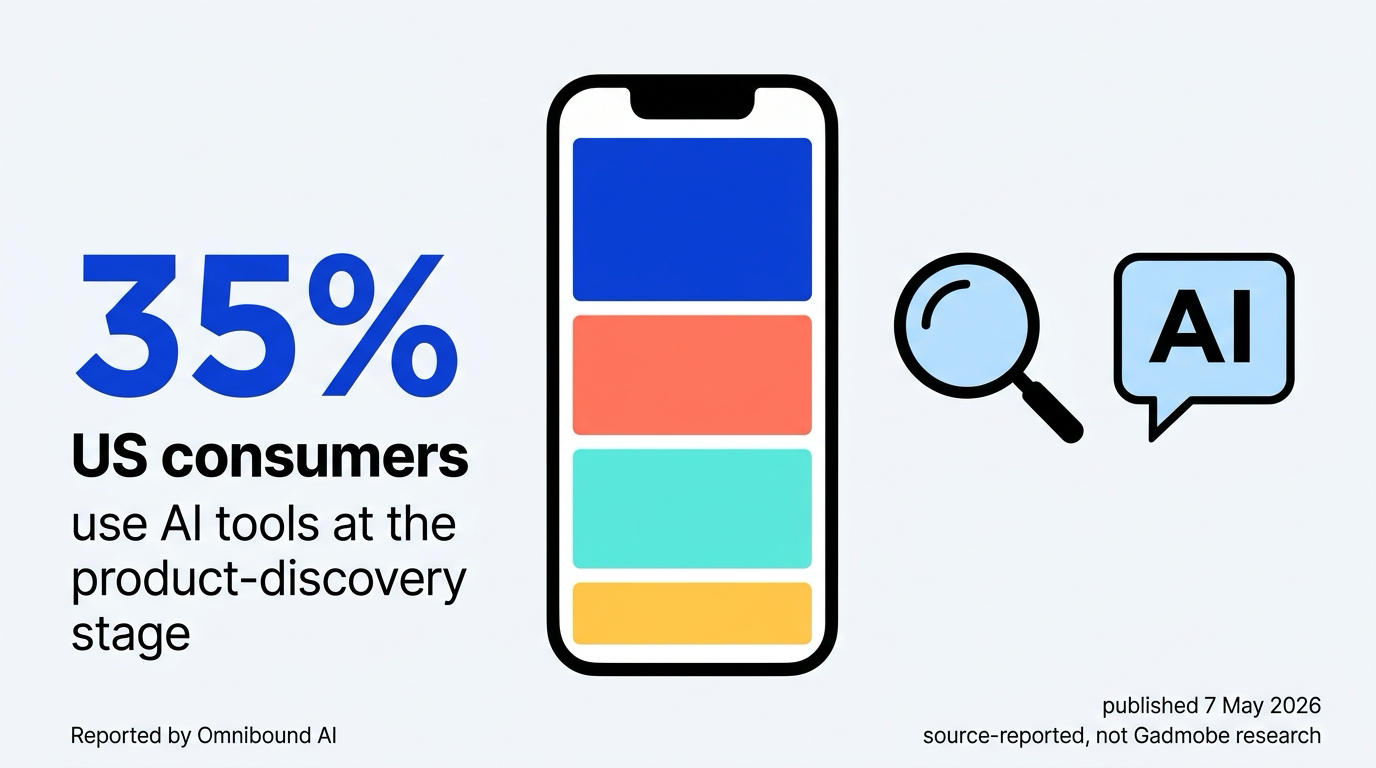
Stores and search are no longer the only discovery routes. As reported by Omnibound AI (published 7 May 2026), 35% of US consumers use AI tools at the product-discovery stage. The figure covers product discovery generally, not apps specifically, and is the source's figure, not Gadmobe research.
> Infographic: Chart showing the reported share of US consumers using AI tools for product discovery.
Foresight Mobile describes (published 9 July 2026) how assistants can, in some operating-system contexts, invoke an app's actions directly. Diversify discovery sources and measure incrementally; treat AI assistants as a shift to watch, not buyable performance inventory.
Traffic quality and fraud controls to require from any partner
Ask any partner to commit in writing to:
- MMP-verified attribution, with your MMP as source of truth.
- Source and sub-publisher transparency you can audit.
- Post-install event validation, not installs alone.
- Clawback terms for traffic later found invalid.
- Privacy-aware measurement following each platform's current rules: on iOS, Apple's App Tracking Transparency framework and privacy-preserving attribution tools; on Android, the options Google currently documents.
These are requirements to negotiate, not guarantees. Platform rules change and privacy requirements vary by platform and jurisdiction, so check them with your own advisers. Our privacy-first performance guide covers measurement in more depth.
A 30-day pilot plan for testing a performance partner
A pilot should answer whether a partner delivers users who behave like your best existing users. Set every threshold before spend starts.
| Week | Focus | Checkpoint |
|---|---|---|
| 1 | Tracking and payable-event agreement | MMP integration tested; event and attribution windows signed off |
| 2 | Capped test budget, source transparency | Spend cap holding; source reports received |
| 3 | Quality read | Event and retention rates compared with your organic baseline |
| 4 | Scale or stop | Results checked against pre-agreed thresholds |
Week 4 is a decision point, not a formality. If quality lags your baseline, stop or renegotiate the payable event rather than add budget. Compare like-for-like: use the same event and retention days for partner and organic cohorts, and log tracking or creative changes mid-test. Record the decision owner, data source and exclusions before results arrive.
When to bring in a managed performance partner
Outsourcing can make sense when your team lacks MMP expertise, runs campaigns across markets, or needs transparent sourcing it cannot build in-house. Evaluate any prospective partner, including Gadmobe, by asking for its sources, controls and pilot plan before committing.
To explore whether Gadmobe's mobile performance advertising service suits your app, read how we work with app advertisers. Results depend on your app, market and payable event, so no outcome is guaranteed. To discuss a possible pilot, contact our team.
Mobile performance marketing FAQ
Is performance marketing only for gaming apps?
No. Social, shopping and other app-first businesses use it; the payable event differs.
What should be the payable event?
The earliest action genuine users reach quickly that predicts revenue in your own data.
How long before a pilot is readable?
Week 3 gives the first quality read in this framework. Longer retention reads need more time, so agree in advance which signals the week-4 decision will use.