

Mobile game ads should be tested as a controlled decision, not bought as a generic install campaign. Before scaling rewarded video, define one audience, creative, placement, and frequency hypothesis, then judge it against quality and revenue signals that matter to the game—not installs alone.
Why mobile game ad-format tests need a profitability hypothesis
A format can produce inexpensive installs and still fail the business case if those users do not retain, engage, or purchase. Start with a hypothesis that connects the variable you can change to the outcome you need: for example, whether a gameplay-led rewarded-video concept produces more qualified new-user value than a feature-led concept for one defined audience. The hypothesis gives the team a reason to hold the rest of the campaign steady.
SuperScale’s guide to A/B testing in mobile games supports the practical principle of isolating a meaningful game or monetization variable rather than changing several variables at once. That discipline does not make a result transferable across genres, regions, or pla
The rewarded-ad trend: what the reported benchmarks do—and do not—tell a game marketer
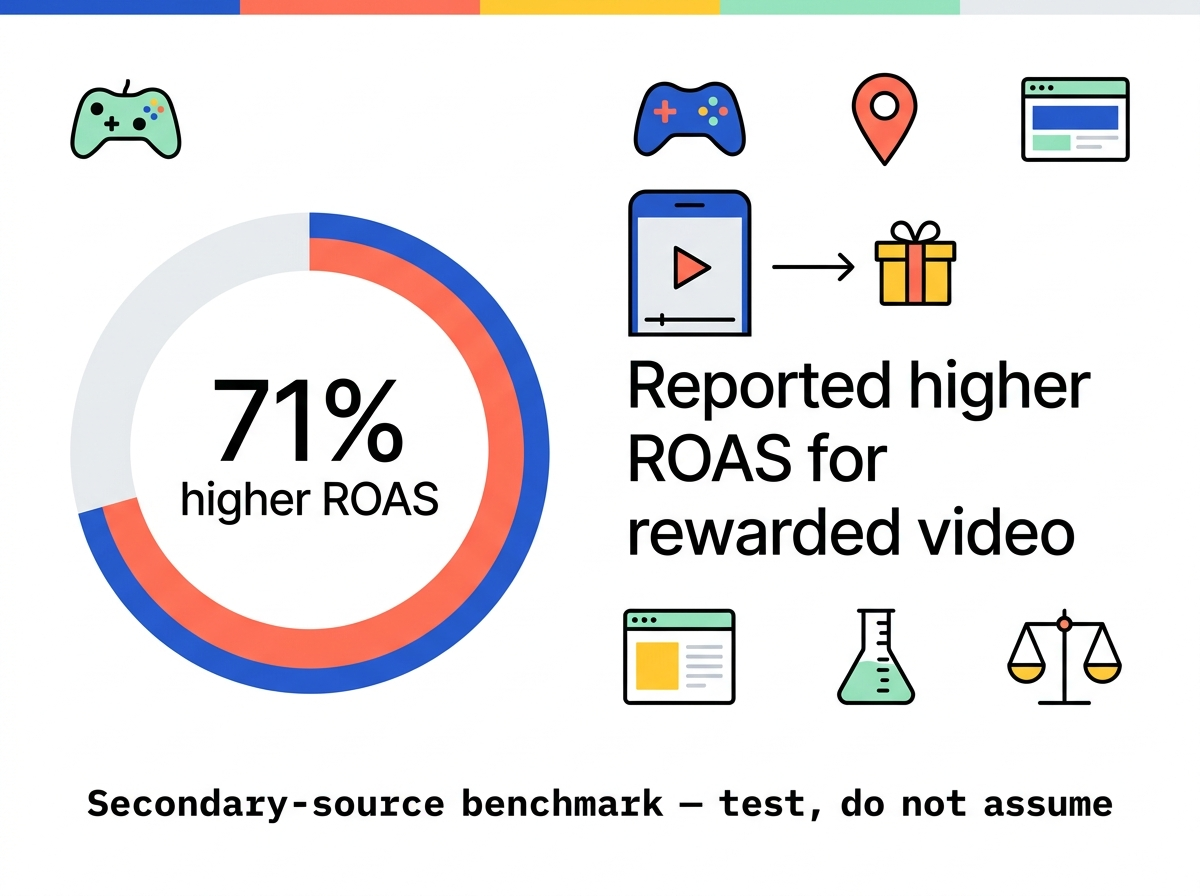
Rewarded video is worth considering because the player opts into a value exchange for an in-game benefit. In a hybrid-monetization environment, it can sit alongside in-app purchases rather than replace them. Tenjin’s 2026 ad-monetization report identifies hybrid monetization as a current mobile-gaming trend. It does not establish a universal result for rewarded video, a genre, or a campaign.
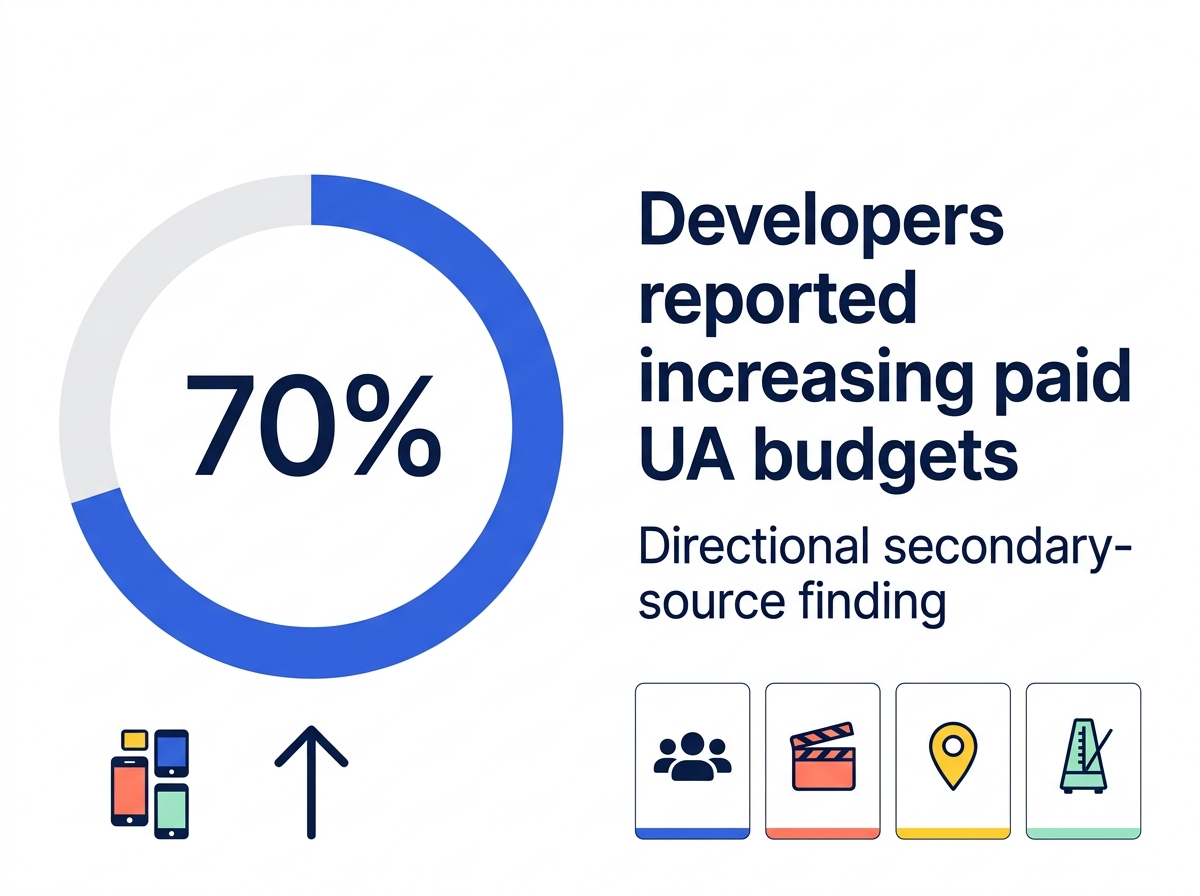
Avoid treating rewarded advertising benchmarks as a scale decision. Differences in game genre, region, platform delivery, attribution window, and creative can change what an apparent result means. Use third-party discussion to form a hypothesis, then compare rewarded video with feasible alternatives under the same measurement design.
, a genre, or a campaign.Avoid treating rewarded advertising benchmarks as a scale decision. Differences in game genre, region, platform delivery, attribution window, and creative can change what an apparent result means. Use third-party discussion to form a hypothesis, then compare rewarded video with feasible alternatives under the same measurement design.
Choose the test objective before choosing a mobile game ad format
One cell needs one primary objective. If the immediate constraint is profitable acquisition, optimize toward a defined revenue or value event rather than raw installs. If the product team needs to validate a new reward mechanic, make qualified engagement the primary measure and protect monetization with a revenue guardrail. AppsFlyer’s ROAS explainer explains why return on ad spend requires a clear revenue definition and measurement window.
| Objective | Audience | Creative or placement variable | Success metric | Guardrail |
|---|---|---|---|---|
| Find valuable new users | One prospect segment | Reward framing | Revenue or value-event ROAS | CPI and early retention |
| Validate reward fit | One game cohort | Reward type | Completed rewarded actions | Purchase or ad-revenue signal |
| Refresh creative | One stable audience | Gameplay concept | Qualified install rate | Frequency and fatigue |
For a mobile game ROAS test, document the event definition before launch. Otherwise, a delivery metric can become a substitute for the commercial question the campaign was meant to answer.
Build a rewarded-ad test cell: audience, creative, placement, and frequency controls
Write a test card before launch: eligibility, one variable, fixed audience, bid, and geography settings, frequency cap, decision date, and stop rule. A single audience split and one creative or placement variable are more interpretable than “rewarded versus everything.” This is also the point to distinguish mobile ad formats: the test should explain which format, placement, or reward framing changed, not merely report that spend moved.
Refresh concepts deliberately. Unity’s mobile game UA guide and Segwise’s creative-testing guide support iterative creative learning. Confirm campaign-specific audience, measurement, and platform settings before launch; requirements and available controls vary by platform and market.
A mobile game ads test-plan checklist
Before activating a cell, record the audience definition, the single changed variable, the comparison condition, the primary outcome, the guardrail, the observation window, and the decision owner. Keep a change log for bid edits, creative refreshes, and overlapping activity. That record makes it possible to separate a planned comparison from an operationally changing campaign.
The checklist also prevents a familiar failure: declaring a winner after several variables moved at once. If the comparison is not interpretable, preserve the observation as a lead for the next test rather than presenting it as evidence that a format caused the result.
Measure the test beyond installs: quality, retention, and revenue signals
Use a metric ladder. Start with delivery and install diagnostics, then check onboarding or a game-specific value event, early retention, ad engagement or purchase behavior, and the revenue window the economics can support. The decision is not “did rewarded video win?” It is whether this controlled cell produced enough valuable-user evidence to justify the next budget step.
For causal questions, introduce a control where feasible. Adjust’s incrementality guide describes the core comparison: a test group against a credible control group. It is more demanding than attribution reporting, but it reduces the risk of calling organic demand, seasonality, or overlapping campaigns a format effect.
Read results without overclaiming causality
Set the decision rule before viewing outcomes. Scale only when the primary measure improves while guardrails remain within the agreed range; iterate creative when quality is promising but delivery is weak; stop when the cell misses its primary metric or harms the guardrail. Small samples, changing platform delivery, and imperfect attribution can make apparent differences noisy. Record the observation, its limits, and the next test rather than claiming that one campaign proved a universal rule.
This format framework is not a vendor comparison. If the team is deciding which measurement or UA tools it needs, Gadmobe’s guide to mobile game user acquisition tools is the more relevant next read.
When to bring in a managed mobile performance advertising partner
A repeatable test program requires campaign design, creative learning, measurement discipline, and a commercial decision at the same time. Gadmobe can explore how to apply this framework to managed mobile performance advertising and mobile app user acquisition, with a channel-neutral focus on the next decision rather than a promised benchmark.
Explore Gadmobe’s advertiser solutions or contact the team. Bring the objective, eligible markets, measurement window, and revenue guardrails to the consultation.