

Marketing mix modeling (MMM) uses aggregated historical data to estimate how marketing channels and outside factors relate to business outcomes. For mobile-first brands, it can complement mobile attribution for budget decisions when user-level signals are incomplete—not replace day-to-day campaign optimisation.
What marketing mix modeling measures for a mobile-first brand
Marketing mix modeling connects changes in spend, media exposure and contextual factors with outcomes such as installs, revenue or qualified conversions. It looks for aggregate patterns rather than assigning one user journey to a touchpoint. That makes MMM useful for a leadership question: where should the next budget allocation go?
The value is perspective, not certainty. A model can compare channel contribution while accounting for seasonality, promotions or product changes, but its answer depends on inputs and assumptions. Treat it as a planning input to test, not a black-box verdict.
Start by agreeing on the business outcome: installs for a launch, or revenue, repeat purchase or a qualified in-app event when growth quality matters. A managed mobile performance advertising programme can align channel decisions with that outcome.
Why attribution alone is under pressure in mobile app marketing
Mobile app attribution remains valuable for tactical decisions, but its view is necessarily shaped by available signals, platform rules and consent choices. Privacy changes and fragmented journeys make it harder to rely on a single user-level measurement view across every channel. Braze’s overview of attribution challenges describes how privacy and data fragmentation complicate measurement; the exact impact varies by jurisdiction, platform configuration and a brand’s consent approach.
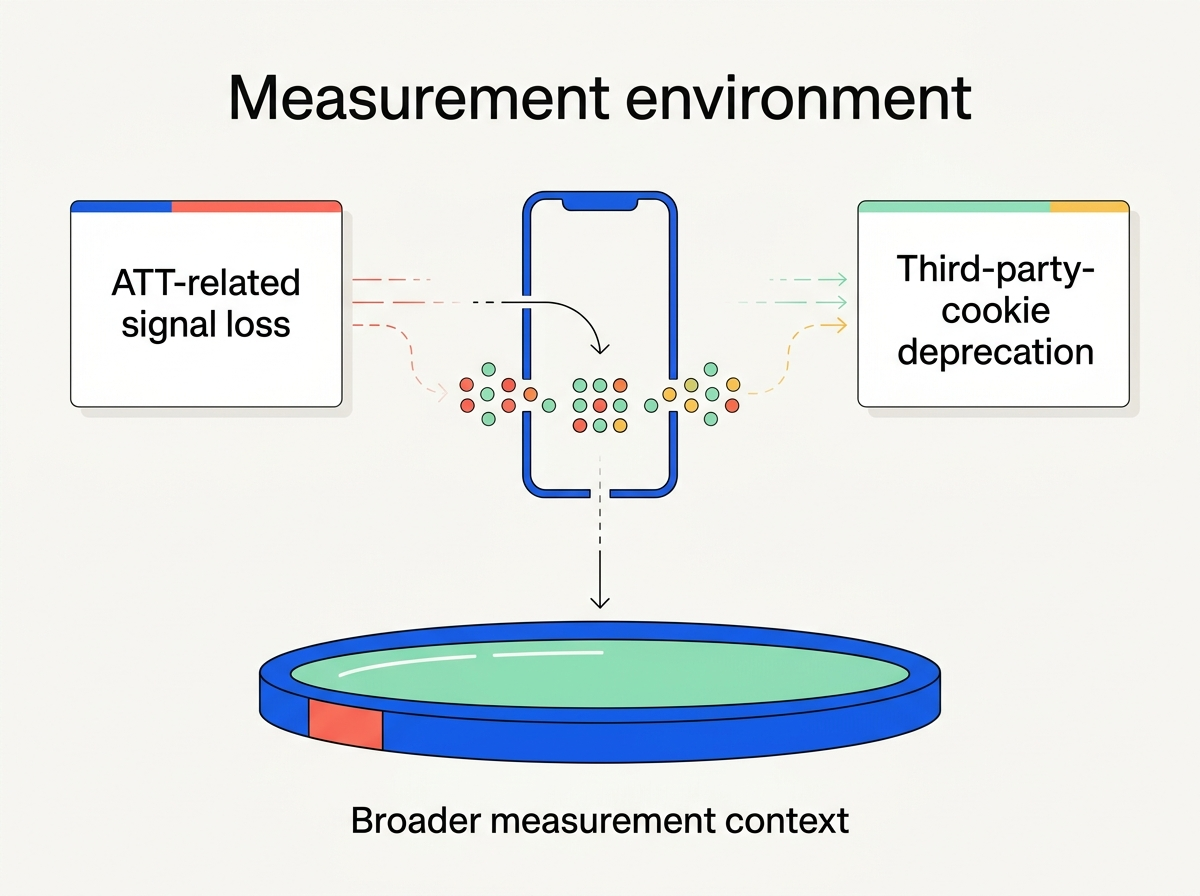
This is why senior teams should not ask attribution to answer every budget question. Channel reporting can guide creative, audience and placement decisions, but may not capture longer purchase cycles, cross-channel effects or incrementality. MMM offers a broader aggregate view.
MMM vs. mobile attribution: different questions, complementary inputs
The useful comparison is not MMM *versus* mobile app attribution; it is which question each method can answer well. MMM is generally better suited to strategic planning: estimating broad channel contribution, considering external context and informing how a future budget could be distributed. Attribution is better suited to tactical execution: monitoring a campaign, comparing creative or audience combinations and making timely in-platform adjustments.
Branch’s mobile MMM explainer similarly frames MMM as a complementary measurement approach. A sound operating model uses the strategic read to set hypotheses, then uses campaign-level reporting and controlled experiments to challenge those hypotheses. This prevents a common failure mode: moving budget because a dashboard reports a result without checking whether the result is repeatable or incremental.
For teams comparing multi-touch attribution vs marketing mix modeling, the decision is rarely all-or-nothing. If the question is “which creative should we refresh this week?”, attribution and platform evidence are more actionable. If it is “how should next quarter’s budget change across channels?”, MMM may add a planning layer.
When a mobile growth team should evaluate MMM
Consider MMM when channel investment is material, the team has a defined outcome and decision-makers need a cross-channel budget view. It is particularly relevant when attribution blind spots make a last-touch report incomplete for planning.
Do not begin with a vendor shortlist. Begin with a decision statement: “If this analysis changes our confidence, which budget, market or creative investment could we change?” Without a changeable decision, the project risks becoming an interesting report without operational value.
MMM is not a substitute for consent management, platform measurement or disciplined experimentation. Its conclusions are modelled estimates that need commercial context and a test plan.
A practical MMM readiness checklist for mobile performance advertising
Before investing in MMM, assess four foundations:
- Sufficient consistent history: the team needs a stable time series; Adjust’s MMM primer notes that historical, consistent data is central to useful modeling.
- Defined business outcomes: agree whether the model should focus on installs, revenue, subscriptions or another meaningful outcome.
- Channel and context inputs: bring together spend and exposure data by channel, plus known events such as promotions, launches or seasonality.
- A validation plan: reserve the ability to run controlled tests or holdouts where feasible, so the model informs a testable hypothesis rather than a permanent allocation.
Inconsistent naming, missing spend records or changing outcome definitions can weaken the model before analysis starts. Document limitations and ownership before selecting a tool.
How to turn MMM findings into channel and creative tests
Translate each finding into a bounded action: a channel-budget hypothesis, market test, creative refresh or measurement check. Define the outcome, timeframe, comparison group and decision owner before changing spend.
Creative can be part of that loop. VidMob’s discussion of creative data and MMM explains how creative data can add granularity to measurement. For a mobile growth team, that is a prompt to pair broader budget insights with disciplined creative testing—not to infer that one asset caused an outcome without validation.
Gadmobe’s mobile app user-acquisition services and advertiser solutions are relevant where brands need managed channel evaluation and optimisation. For measurement context, see Gadmobe’s mobile performance advertising measurement guide.
Questions to ask a mobile performance advertising partner
Ask how the partner will connect measurement to an operating decision, which data limitations will be documented, and how model-led recommendations will be validated through campaign tests. Ask, too, whether reporting distinguishes observed attribution from modelled estimates. Clear answers protect against overconfidence and make it easier to act on findings responsibly.
Marketing mix modeling is most useful when it gives leadership a clearer, testable view of budget trade-offs. Used alongside attribution, quality controls and experimentation, it supports planning without promising certainty where data cannot provide it.