

A mobile game user acquisition tool should help a team assess player quality after installation, not merely compare installs. Use a bounded framework for channel fit, rewards, measurement, creative testing and controls to decide whether evidence supports continuing, adapting or stopping a test.
Why player quality changes how you evaluate mobile game user acquisition tools
A large install count can obscure a weak cohort. A more useful comparison asks whether a channel, platform or prospective partner can be assessed against the engagement, retention and value signals relevant to the game. Unity’s mobile-game UA guide makes the case for quality over volume, while Branch’s framework links cohort retention to both targeting and the post-install experience.

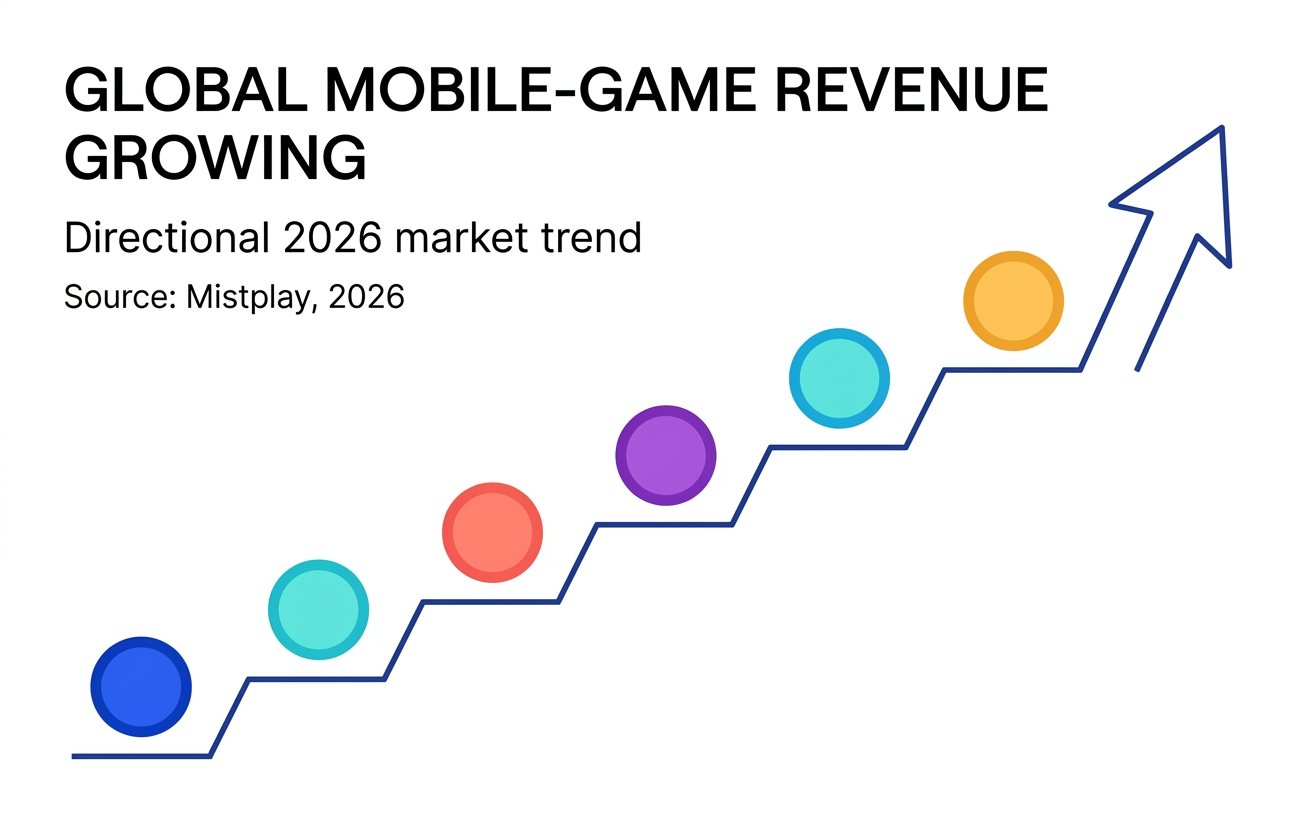
Mistplay’s 2026 market overview describes global mobile-game downloads as flat and revenue as growing. These directional observations are not evidence that a particular channel will produce a more valuable cohort. They do make it sensible to distinguish an install total from evidence collected after installation.
A tool comparison also separates software features from operating decisions. A self-serve platform may suit a team with in-house resources, while a managed engagement may suit a team seeking exploratory planning help. In either case, the buyer needs a player-quality hypothesis before interpreting results.
The evaluation framework: channel fit, rewards, measurement and controls
Use the same scorecard for each candidate among mobile game user acquisition tools:
1. Channel and audience fit. Ask which player contexts a channel can reach, how targeting is described, and whether the format fits the game’s genre, onboarding and geographic plan. Reach alone is not evidence of incremental demand.
2. Reward design. Rewarded user acquisition is an approach worth considering when the reward is transparent and relevant to the experience. adjoe’s guide discusses rewarded UA alongside post-install engagement and retention. Test the approach against the offer, audience and game experience rather than treating an industry pattern as a result for a specific campaign.
3. Measurement readiness. Agree the event taxonomy, attribution window and cohort cuts before launch. D1, D7 and D30 retention can be useful checkpoints alongside engagement or monetisation events that the team can validate. Consent, platform and jurisdiction requirements vary; their practical treatment needs appropriate legal, platform and service-scope review.
4. Fraud-control visibility. Ask how suspicious activity is identified, investigated and reported, including what the reporting cannot establish. AppsFlyer’s field guide explains that fraud can distort attribution data and complicate evaluation.
5. Creative testing discipline. Require a documented hypothesis, a defined variable and enough traffic for a practical decision. Segwise’s testing guidance emphasises clear hypotheses and statistically significant test cells. A result from one audience, platform or period merits retesting before broader use.
What to ask before choosing a mobile game user acquisition tool
Keep the vendor discussion specific. Ask which events the tool can optimise toward, how cohorts are reported, whether raw and aggregated reporting can be reconciled, what creative inputs are needed, and who owns a decision when a quality signal deteriorates. Request a proposed test design and its limits instead of an advance promise about retention, LTV or return on ad spend.
Also ask which comparisons the tool cannot make. Last-click attribution does not demonstrate that a channel caused every observed outcome. Adjust’s incrementality guide describes incrementality as a way to assess causal impact alongside standard attribution. It can inform a decision when the test design is credible, but it is not an instant replacement for attribution reporting.
Comparing tools without over-claiming outcomes
Build a one-page comparison that assigns an owner, measurement method and decision threshold to every candidate. Score channel fit, operational workload, event coverage, reporting transparency, fraud-control visibility and creative-test capability. Then document what evidence would support continuing, changing or stopping a test, and what evidence would remain inconclusive.
The practical operator question is: “What would convince us that this is reaching the kind of player we want?” It is more useful than a feature checklist because it connects the tool decision to a testable hypothesis. Cheap installs are preliminary until downstream evidence is available, not a verdict on player quality.
How Gadmobe supports managed mobile user acquisition
Teams exploring external help can start an exploratory consultation through Gadmobe’s mobile app user acquisition page. The related mobile performance advertising page and gaming vertical page provide additional context for a conversation about campaign objectives and evaluation needs.
That conversation should retain a clear boundary: no agency, platform or tool can responsibly promise retention, LTV, ROAS, incrementality or fraud outcomes in advance. A sound brief instead states the hypothesis, measurement limits, review point and decision process that the team will use.
Next steps: build a test plan around player-quality hypotheses
Start with one acquisition question, one primary success signal and a small set of guardrails. Record the audience, creative premise, reward treatment, attribution approach and review date before spend begins. Compare cohorts rather than isolated install totals, and keep decisions provisional where measurement is incomplete.
If your team is evaluating a mobile game user acquisition tool or partner, contact Gadmobe for an exploratory discussion about a test framework that reflects your operating constraints and evidence requirements.