

Mobile app marketing companies should be assessed by their fit with your growth problem, their ability to turn measurement into action, and the clarity of their campaign controls—not by the length of a service menu. A disciplined comparison gives your team a testable basis for choosing whether to begin a pilot.
Start with the mobile growth problem you need a partner to solve
Start with the outcome you need to improve: qualified installs, customer acquisition efficiency, re-engagement, or a clearer investment view. Document target markets, app category, internal creative capacity, measurement setup, approval process, and pilot budget.
A credible fit for one problem may not fit another. Before meeting providers, make a short brief naming the priority KPI, audiences, decisions reporting must inform, and non-negotiable guardrails. Ask each candidate for a relevant operating hypothesis, not a generic presentation.
How to compare mobile app marketing companies
Use the same questions and evidence standard for every candidate. The aim is not to crown a “best” provider; it is to identify the operating model that matches your goals. A written record also makes a pilot easier to govern.
Compare channel and inventory strategy—not a generic agency menu
Ask each prospective mobile app marketing agency how it would relate channels, formats, and inventory choices to your objective. A useful answer is a reasoned hypothesis: the audience, channel role, creative format, and measurement signal it would test first, plus the evidence that would change the plan.
Partner-selection guidance from TechArk and Adapty emphasizes matching specialist expertise to the business need rather than treating a broad service list as proof of fit.
Ask which channels are proposed and their funnel roles; which audience, creative, or placement assumptions shape the plan; how exploration differs from scale; and what evidence would prompt reallocation or a pause. When assessing specialist support, review Gadmobe’s mobile app user acquisition services alongside the provider’s proposed approach, not as a substitute for your own diligence.
Ask how the partner turns measurement into campaign action
Reporting matters when it changes a decision. Ask candidates to describe an anonymised workflow: what signal appeared, who interpreted it, what changed, when the effect was reviewed, and who owned the next action. That can reveal more than a dashboard demonstration.
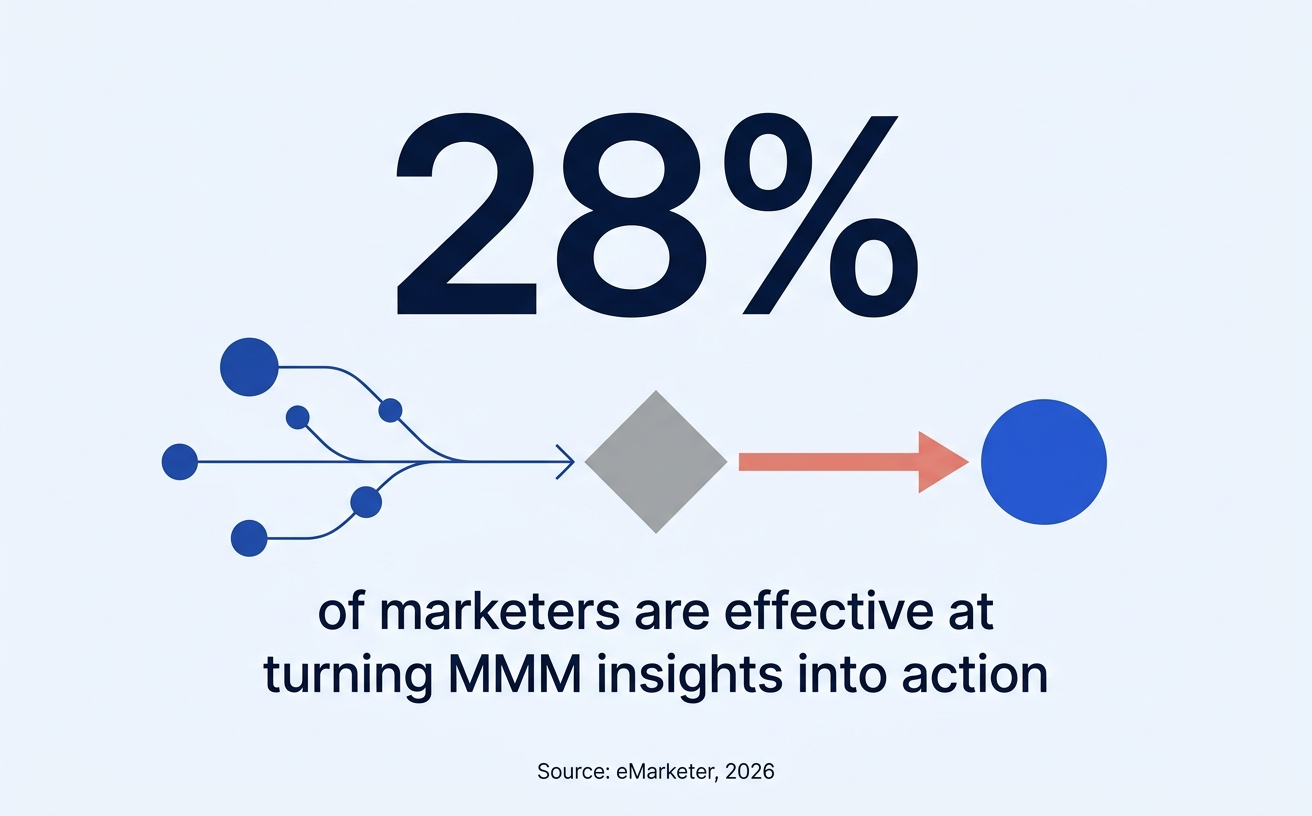
A 2026 eMarketer report states that 28% of marketers were effective at converting marketing mix modeling insights into action. The lesson is not that every organisation needs the same measurement method; it is that a prospective partner should explain how analysis becomes an operational choice. See the eMarketer report for the finding.
Ask whether recommendations connect to test design, budget decisions, creative learning, and documented ownership. Practices vary by platform, market, and your own legal and technical arrangements, so validate proposed workflows rather than accepting a compliance or performance promise.
Evaluate quality controls, reporting cadence and optimization ownership
Campaign quality is an operating discipline. Ask how a provider checks placement suitability, monitors delivery anomalies, manages creative approvals, and escalates issues. Establish a reporting cadence that supports decisions without creating reporting for its own sake.
Define ownership for daily optimisation, weekly interpretation, stakeholder communication, and major changes. Marstudio’s agency-performance guidance supports evaluating accountable reporting and optimisation processes. The right cadence depends on spend, data volume, market volatility, and decisions your team can make.
Check privacy-aware data and measurement practices with your legal team
Privacy diligence is part of selection, not legal advice. Ask what data a prospective partner would receive, what it would process on your behalf, where responsibilities would be documented, and how access, retention, and incident communication would be addressed. Your legal and privacy teams should assess applicable requirements for your jurisdictions, platforms, and contractual arrangement.
A privacy policy and data-processing documentation can be useful diligence questions; Secure Privacy’s agency GDPR guide explains why. Do not treat a vendor statement as a compliance certification. Confirm the specifics with qualified counsel and your data-governance team.
Use a provider-comparison scorecard before a pilot
A scorecard can keep the sales process anchored to actual requirements. 8FA’s agency-scorecard overview supports using a structured framework tied to meaningful metrics rather than vanity signals. Score each candidate against the same criteria and record the evidence behind each score:
1. Problem fit: Does the plan address the outcome and constraints you defined?
2. Channel rationale: Are channel and inventory choices explained in relation to that objective?
3. Measurement to action: Is there a clear workflow from signal to decision to review?
4. Quality and governance: Are controls, reporting, responsibilities, and escalation paths clear?
5. Pilot design: Are scope, success measures, learning agenda, and stop conditions agreed before launch?
The scorecard cannot guarantee results. It creates a comparable record of assumptions and makes a pilot easier to govern. Choose the partner whose evidence and operating model fit your needs, rather than the one making the broadest claims.
When to involve a managed mobile performance partner
Consider an exploratory conversation when your team is assessing whether external support could help with a defined growth challenge. Bring your goals, market context, and decision requirements rather than relying on a generic pitch.
For a starting point, explore Gadmobe’s mobile performance advertising page and advertiser solutions. To discuss fit for a defined challenge, contact Gadmobe with the priorities and questions you want a prospective partner to address.