

Connected TV (CTV) can pair a high-attention screen with a direct mobile action. But reach is not a growth result: impressions, scans, installs, and post-install events describe different stages.
For teams assessing cross screen user acquisition solutions for mobile apps, the useful question is whether a bounded test can produce credible evidence of incremental, quality app outcomes. That requires a defined handoff, measurement configuration, and decision rules before media is bought.
What CTV-to-mobile acquisition is—and is not
CTV-to-mobile acquisition connects a TV ad with a possible mobile action: a viewer may scan a QR code, visit a short link, reach an app-store page, install, or complete a later business event. The path can be useful, but should not become one conversion claim.
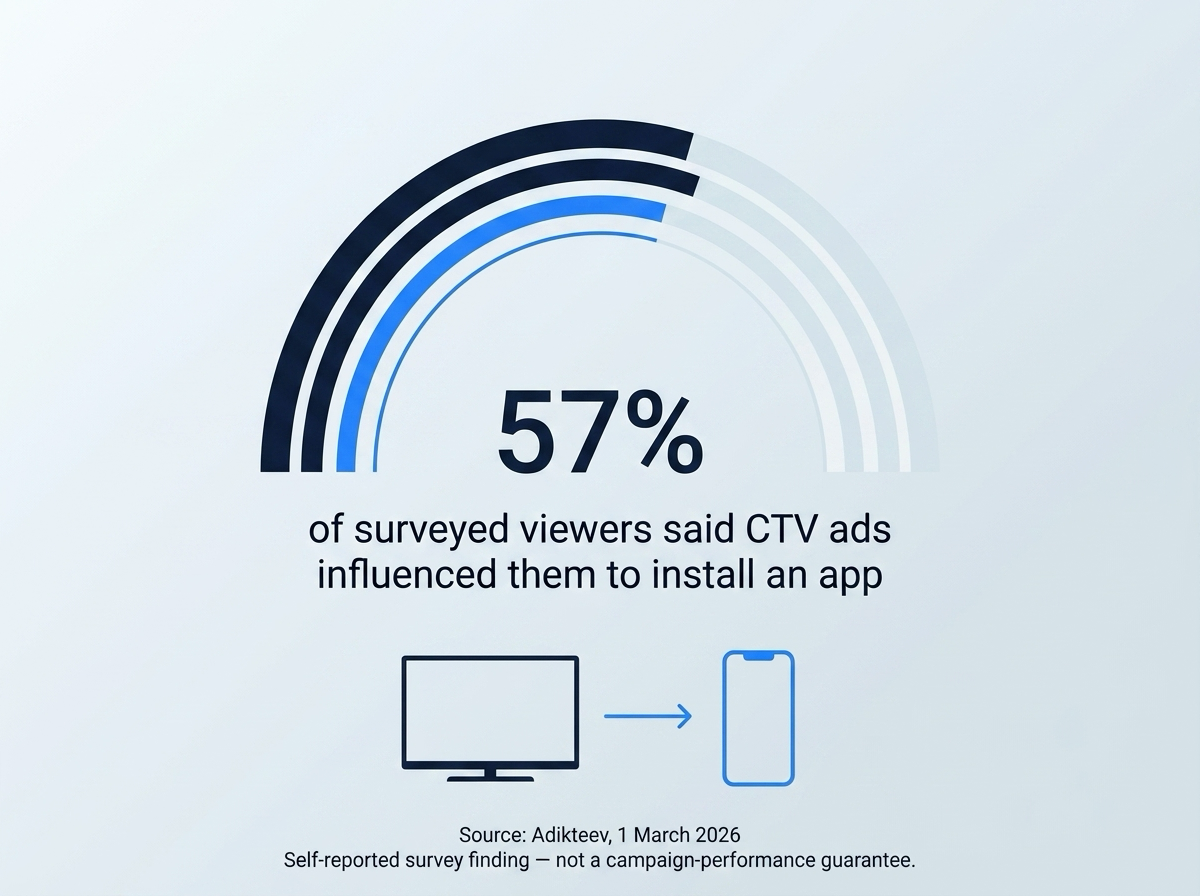
One recent survey is a directional signal, not a forecast. Adikteev’s 2026 CTV UA guide reports that 57% of surveyed viewers said CTV ads influenced them to install an app. That is a self-reported survey finding—not a universal rate, causal result, or campaign-performance guarantee.
Measurement can extend beyond exposure. Adjust’s connected-TV-to-mobile guidance describes a configured workflow in which cross-device attribution commonly relies on probabilistic matching. Workflows vary by platform, market, consent design, and measurement partner. Treat results as evidence shaped by test design, not automatic proof that CTV caused every observed install.
Where CTV advertising can fit
CTV advertising is most plausible when a visual proposition creates intent and the next mobile action is simple—for example, a gaming play moment, ecommerce benefit, or entertainment trailer.
The channel is not automatically suitable for every mobile app acquisition strategy. A complicated onboarding flow, weak proposition, unavailable local store listing, or mismatched landing page can break the journey after a strong impression. Start where app availability, creative relevance, and measurement prerequisites can be checked.
Teams considering a wider mix can use Gadmobe’s Mobile App User Acquisition service to begin an exploratory conversation. Confirm delivery, market, inventory, and measurement options for the specific campaign.
Cross screen user acquisition solutions for mobile apps: build the handoff first
A credible CTV-to-mobile test joins four components:
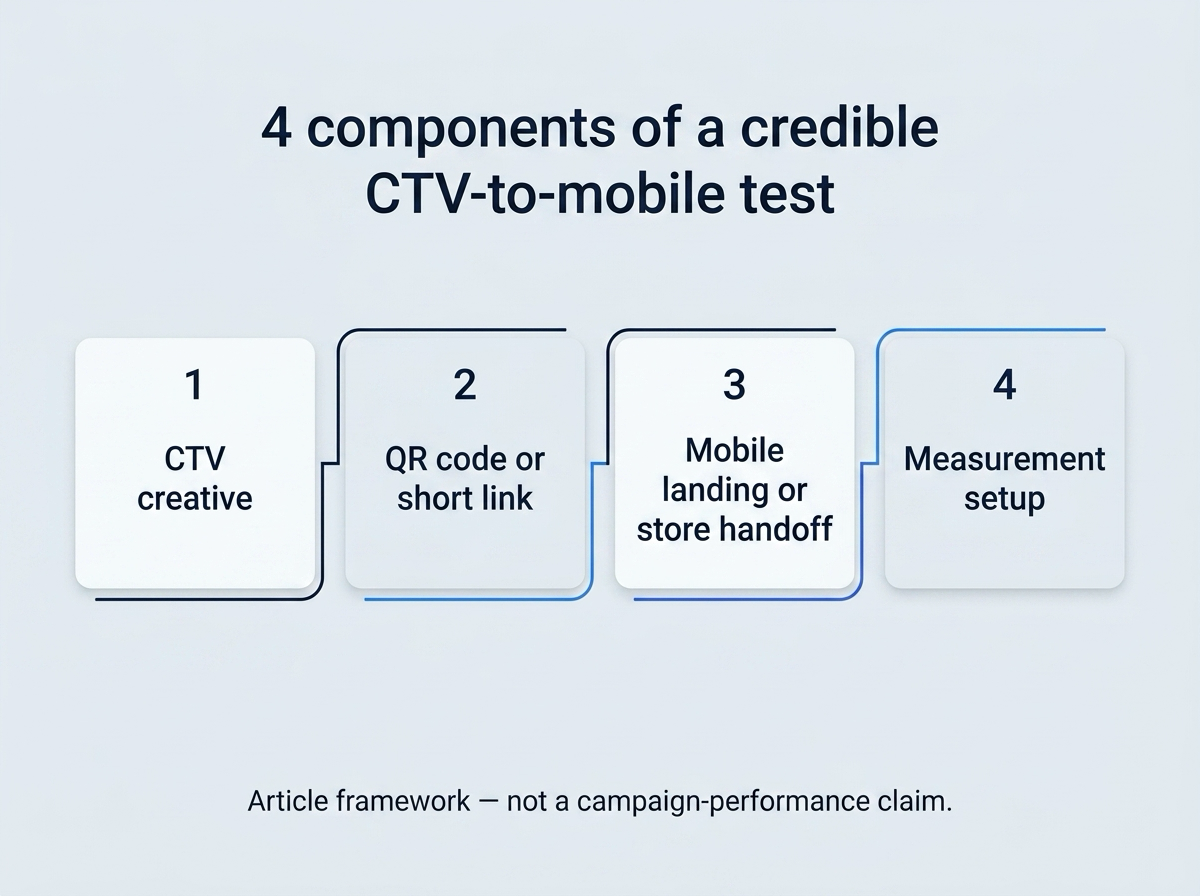
1. CTV creative: Make one product benefit legible at TV viewing distance and present one clear next step.
2. QR code or short link: Use a readable, destination-controlled handoff. A scan is an engagement signal, not an install.
3. Mobile landing or store handoff: Keep the TV message consistent, route visitors to the appropriate page or store, and apply campaign parameters consistently.
4. Measurement setup: Confirm the measurement partner, cross-screen settings, event taxonomy, postbacks, and reporting owner before launch.
Creative and destination should operate as one journey. If an ad promises a gameplay feature or offer the mobile page does not substantiate, scan intent may not become installation intent. For broader context, see Gadmobe’s mobile app user acquisition trends for 2026.
Define the evidence ladder before spend
Set the decision model in advance and track eligible CTV impressions; QR scans or short-link visits; store-page visits; installs; registrations or first opens; and the post-install event that reflects business value, such as a completed tutorial, first purchase, or subscription start.
These are not interchangeable metrics. QR engagement indicates response to a call to action. An attributed install may indicate a modeled association. Post-install events show whether acquired users are useful. Incremental lift asks whether those outcomes would have happened without CTV activity.
Measurement providers describe ways to connect CTV impressions with mobile outcomes, but implementation determines whether a result is interpretable. Improvado’s CTV measurement guide covers attribution and pilot design; Kochava and YouAppi highlight configuration risks. Document the lookback window, validate postbacks, and confirm post-install events before deciding on scale.
Run a pilot that can change a decision
Treat the first flight as learning, not a scale commitment. Define audience, market set, flight, budget, data owner, and—where feasible—a preselected geo-based holdout or other defensible comparison.
Write decision rules in plain language. Continue only if tracking is complete, the activation funnel works technically, and the agreed comparison shows evidence of incremental quality outcomes. Pause or redesign when scans fail to reach the store, events are missing, or attributed outcomes cannot be separated from baseline demand. Short lookback windows, disabled cross-screen settings, and incomplete post-install data can distort interpretation.
Before a campaign build or jurisdiction-specific guidance, validate the relevant privacy, platform, app-store, and measurement-partner requirements for the proposed implementation. This article covers measurement-design considerations, not legal or compliance advice.
An exploratory Gadmobe consultation
If CTV merits investigation, Gadmobe’s Mobile Performance Advertising page and advertiser solutions page offer places to begin an exploratory consultation. Bring the app, target market, desired post-install event, available measurement setup, and comparison idea. Gadmobe can then confirm which campaign options, partners, and responsibilities may be appropriate; none should be presumed from this framework.
The next step for cross screen user acquisition solutions for mobile apps is a measurable pilot: define the conversion event, comparison method, data dependencies, and scale-or-stop rule before the first impression is served.